
Battery add-on
Adding a battery to the solar you already have: what works and what it changes
Most home solar systems can take a battery, and adding one does not end NEM 1 or NEM 2 or move you to NEM 3. Here is what works with the equipment you have, what PG&E requires, and what to do next.
Watch Brett answer these questions (13 min)
Reviewed by Brett Joerger, Founder, Westhaven Power. CA License 965111. Last reviewed .
Key facts
- Most home solar systems can take a battery, including systems another company installed.
- Adding a battery by itself does not end NEM 1 or NEM 2, and it does not move you to NEM 3. You keep your plan and your 20-year date.
- You can add panels too, up to 10% of your system's original size or 1 kW, whichever is greater. To add more, a battery and new panels go in as a separate zero export system that never sends power to PG&E, and your plan stays.
- PG&E has to approve the battery before it is turned on.
- Solar by itself shuts off when the grid goes down. With a battery, it keeps running.
Start here
Can I add a battery to the solar I already have?
Can I add a battery to solar panels I already have?
Yes. Most home solar systems can take a battery, including systems that are 10 or 20 years old and systems another company installed. Three things decide how it gets done: the kind of inverter you have, the condition of your main electrical panel, and who owns the system. At least 16,000 PG&E homes have added a battery to existing solar since 2018.
Can I add a battery if a different company installed my solar?
Yes. A battery can be added to solar that another company installed. Most batteries connect to your home's wiring beside the existing solar, so the original equipment stays as it is. Westhaven works on systems it did not install.
Can I add a battery if my installer went out of business?
Yes. You do not need the original installer to add a battery. A new installer inspects the system, files the PG&E application and installs the battery. The manufacturer warranties on your panels and inverter stay with the manufacturers.
The solar came with the house. Can I add a battery?
Yes. First find out two things: who owns the system, and when it was first turned on. If it is leased, the lease transferred to you and the leasing company has to agree. The turn-on date matters because the NEM term stays with the house, not the owner.
Is my system too old for a battery?
No. Age alone does not rule a system out. Panels usually keep working long after the inverter wears out. On a 15 to 20 year old system, the common plan is a battery plus inverter work in the same job. Brett's own panels went up in 2006 and now run with batteries.
Do I need a new inverter?
Usually not. An AC-coupled battery has its own inverter and connects beside the one you have. You need a new inverter in two cases: yours is old or failing, or you want the battery and panels to share one inverter and yours is not built for a battery.
Do I need new panels?
No. A battery stores the power your current panels already make. New panels only come up if you want more power than your roof makes today, and adding panels has its own rules under NEM 1 and NEM 2. See "Can I add more panels at the same time?" below.
How do I find out what equipment I have?
Look in three places. A box on the wall near your electrical panel or in the garage is a string inverter, and the brand is on the label. No box on the wall usually means microinverters under each panel. The monitoring app on your phone names the brand. Your PG&E bill names your plan (NEM, NEM2 or Solar Billing Plan).
Why does my solar shut off when the power goes out?
Solar without a battery shuts off in an outage by design. If it kept running, it would send power into lines that crews are working on. A battery changes this. It disconnects your home from the grid in a fraction of a second, and your solar keeps running inside your home.
PG&E's rules
Will adding a battery change my NEM 1 or NEM 2?
| What you do | NEM 1 home | NEM 2 home | NEM 3 home (Solar Billing Plan) |
|---|---|---|---|
| Add a battery only | Keeps NEM 1 and the 20-year date | Keeps NEM 2 and the 20-year date. PG&E may true up the account when the battery is approved. | Keeps the plan, and its nine-year period if it has one |
| Add panels up to 10% of the original size or 1 kW, whichever is greater | Keeps NEM 1. Needs a new PG&E application. | Keeps NEM 2. Needs a new PG&E application. | Keeps the plan, and its nine-year period if it has one. Needs a PG&E application. |
| Add a separate zero export system: a battery and more panels than that (PG&E calls it non-export) | Keeps NEM 1 and the 20-year date. The new system connects separately and earns no export credits. | Keeps NEM 2 and the 20-year date, on the same terms. | Not needed |
| Add more panels than that, exporting | The whole system moves to NEM 3 | The whole system moves to NEM 3 | Stays on NEM 3 |
| Replace a failed inverter or panels like for like | Keeps NEM 1. A notice to PG&E, not a new application. | Keeps NEM 2. A notice to PG&E, not a new application. | No change |
| Use an SGIP rebate for the battery | Moves to NEM 3 if the rebate was reserved on or after June 4, 2024. Three low-income and equity groups are exempt. | Same | No such rule |
Source: PG&E Electric Schedules NEM, NEM2 and NBT, and Electric Rule 21.
Will adding a battery move me from NEM 1 or NEM 2 to NEM 3?
No. Adding a battery does not move a NEM 1 or NEM 2 home to NEM 3, which PG&E calls the Solar Billing Plan. PG&E's tariff says so for both plans. The NEM 2 tariff says adding storage "shall not disqualify Customer from the remainder of their 20-year Transition Period." The NEM 1 tariff treats storage the same way as the solar it is attached to. There is one exception: a battery added through an SGIP rebate reserved on or after June 4, 2024 moves the home to NEM 3, unless the home is in one of three exempt low-income and equity groups.
Do I have to tell PG&E?
Yes. Adding a battery to solar that has none needs a new interconnection request, and the battery cannot run until PG&E gives permission to operate. That is in PG&E's Rule 21. The request fee is $145 for NEM 2 and NEM 3 homes and $0 for NEM 1 homes. Your installer files it. On a NEM 2 account, PG&E may true up your bill when the battery is approved.
Does adding a battery restart or extend my 20 years?
No. The 20 years run from the date your solar was first turned on. Nothing restarts or extends them, including a battery. Zero export does not extend them either. When the 20 years end, PG&E moves the home to NEM 3 (the Solar Billing Plan).
When my 20 years end, can I choose zero export instead of NEM 3?
No. PG&E's tariff does not give that choice. It says a home that has completed its 20 years "must be transitioned" to the Net Billing Tariff, which is NEM 3 (PG&E's Solar Billing Plan). PG&E makes the move at the first true-up after the 20 years end, and no new interconnection agreement is needed. Zero export is a way to add a battery and panels during the 20 years. It is not a way around NEM 3 at the end of them. After the move, a battery keeps your solar in your home, so less of it is sent out for a few cents.
Does the size of the battery matter to PG&E?
Yes. PG&E calls a battery of 10 kW or less small, and anything larger large. A large AC-coupled battery has to use one of four controls, such as a certified power control system or a non-export relay. The tariff also caps a large AC-coupled battery at 150% of the solar's output, but that cap is waived for now.
Can the battery charge from the grid?
It depends on how the battery is set up. PG&E's rule is that NEM credits are paid only for solar power. A battery with a certified control system is set one of two ways: it cannot charge from the grid, or it cannot send power to the grid. A small battery without that control is billed by an estimate, and exports above the estimate earn no credit. A qualified backup system may charge from the grid ahead of a planned safety shutoff.
Does replacing a broken inverter or panels change my NEM?
No, if the replacement is like for like. PG&E's Rule 21 defines that. For an inverter it means certified, and the same nameplate size or smaller. For panels it means the same system rating or smaller. A like-for-like swap needs a notice to PG&E, not a new application.
Do I have to change my rate plan?
No. Nothing in PG&E's rules forces a rate plan change when you add a battery. NEM 2 homes are already on a time-of-use plan. If you choose to switch, PG&E says the change triggers a true-up and starts a new 12-month cycle. A battery opens two more plans: Electric Home (E-ELEC), and EV2-A, which PG&E offers to homes with a battery and no electric car under a pilot.
Can I add more panels, and what is zero export?
Can I add more panels at the same time?
Yes, within a limit. A NEM 1 or NEM 2 home can add solar up to 10% of the system's original size or 1 kW, whichever is greater, and keep its plan, as long as the system does not make more than the home uses in a year. On a 6 kW system the limit is 1 kW. On a 15 kW system it is 1.5 kW. Added panels need a new PG&E application, even inside the limit. To add more than the limit and keep your plan, the new panels go in as a separate zero export system, usually with a battery.
What is the 10% measured against?
The 10% is measured against the system's nameplate rating when it was first connected. Later additions do not raise that base. The tariff does not say whether the allowance can be used more than once, so treat it as a total.
What is zero export, and how does it keep me on NEM 1 or NEM 2?
Zero export is a second system, set up separate from the solar you already have and set so it never sends power to PG&E's grid. It is usually a battery with some new panels. Everything it makes is used in your home or stored in the battery. Because the original system is not changed, the home keeps NEM 1 or NEM 2 and its 20-year date, and it is not moved to NEM 3 (the Solar Billing Plan). It is the way to add more panels than the 10% or 1 kW limit allows. PG&E's tariff allows this and calls it non-export: the new system connects separately under PG&E's Rule 21, and a certified control system holds the export at zero. The trade-off is that the new panels earn no export credits. A battery added with no new panels keeps NEM 1 or NEM 2 either way.
What happens if I add more than the limit and the panels do export?
You choose between two paths. The new panels go on their own as zero export and nothing else changes, or the whole system, old panels included, moves to NEM 3 (the Solar Billing Plan) with a new nine-year period. PG&E's website says the move happens at your true-up. The tariff does not give the timing.
Your equipment
Which batteries work with the solar I have?
| What is on your house | Share of local solar homes | How a battery connects | Batteries that fit | Watch for |
|---|---|---|---|---|
| Enphase microinverters, IQ6, IQ7, IQ8 or IQ9 | About 30% | AC-coupled | Enphase IQ Battery 5P or 10C on the same system, or a Tesla Powerwall 3 beside it | The 10C needs Enphase's IQ Combiner 6C. Backup with the 5P needs the IQ System Controller. Enphase limits how much solar a battery can back up: 150% of the battery's power on IQ6 and IQ7, and more on IQ8. |
| Older Enphase microinverters, M215 or M250 | About 8% | AC-coupled | A Powerwall 3 beside it is usually simpler. The Enphase 5P works with an Envoy S Metered gateway. | Enphase says these microinverters must be replaced if the utility requires the newest grid standard |
| Standard SolarEdge inverter (HD-Wave or older) | 27% | A battery from another brand beside it. Or SolarEdge's Nexis system, added beside the old inverter or swapped in for it. | Powerwall 3 or FranklinWH beside it. Enphase 10C beside it, with a caution. SolarEdge Nexis Battery, which needs a Nexis inverter. | A standard SolarEdge inverter cannot take a SolarEdge battery directly. SolarEdge does not say whether the old solar keeps running in an outage beside a Nexis system. Enphase's own documents disagree on whether the existing solar runs in an outage with a 10C. The Enphase 5P is not supported beside other brands of solar. |
| SolarEdge Home Hub (earlier name Energy Hub) or StorEdge inverter | Very few locally | DC-coupled | SolarEdge Home Battery | Backup needs SolarEdge's Backup Interface. The newer Nexis Battery does not work with a Home Hub inverter. |
| SunPower system | 9% | AC-coupled beside it | Powerwall 3 or FranklinWH. Enphase 5P on types E and H, once Enphase confirms it. | About four in five local SunPower homes have panels with a microinverter built in. A little over half of those (types E, G and H) use Enphase IQ7 microinverters, by SunPower's own datasheets. The rest (types C and D) use SunPower's own microinverter. Enphase has not confirmed its batteries for SunPower systems by name. Its rules point to the 5P fitting types E and H once Enphase's monitoring kit is installed. Type G is unconfirmed. SunPower filed for bankruptcy in August 2024. |
| SMA or Fronius string inverter that works | SMA 7%, Fronius 4% | AC-coupled beside it | Powerwall 3 or FranklinWH. Enphase 10C with the caution above. | A Powerwall 3 backs up to 7.68 kW of existing solar. FranklinWH's limit is its 80-amp solar input. Enphase caps other brands of solar at 15.36 kVA and at 100% of the battery's power. |
| Tesla solar inverter or Powerwall | 6% | Tesla equipment | Powerwall 3 | With Powerwall 2 already: Tesla's own documents disagree on whether a Powerwall 3 can be added. With Powerwall+: the old units have to be replaced. |
| A string inverter that is old or no longer made (ABB, Power-One, Xantrex) | About 5% | DC-coupled: the old inverter comes out and the panels wire into the battery's own inverter | Powerwall 3 (takes up to 20 kW of panels on six inputs) | Like for like under PG&E's Rule 21 means the same nameplate size or smaller |
| A leased or PPA system | About 3 in 10 homes since 2016 | AC-coupled beside it, with the owner's written permission | Any AC-coupled battery | The company owns the panels and inverter |
Shares are of the 201,000 solar homes within 75 miles of Yuba City. Source: Westhaven analysis of California DG Stats PG&E interconnection data, current through August 31, 2026.
Watch Brett answer this (9:23)
What is the difference between AC-coupled and DC-coupled?
Solar panels make DC power, and your home runs on AC. An AC-coupled battery has its own inverter and connects to your home's wiring beside the solar you have. A DC-coupled battery shares one inverter with the panels, so the power is converted once and a little less is lost.
How do I tell whether I need an AC-coupled or a DC-coupled battery?
Check four things, in this order.
- Microinverters under the panels: AC-coupled.
- An inverter built for a battery (SolarEdge Home Hub, StorEdge or Nexis): DC-coupled, with the battery made for it.
- A string inverter that works and is under warranty: AC-coupled beside it. This is the least work.
- A string inverter that is old, failing or out of warranty: DC-coupled. The old inverter comes out and the panels wire into the battery's own inverter. That fixes the inverter and adds the battery in one job.
Which inverters can accept a battery directly?
Three kinds can. Enphase microinverter systems take Enphase batteries. SolarEdge Home Hub inverters (earlier called Energy Hub) take the SolarEdge Home Battery. SolarEdge's newer Nexis inverter takes the SolarEdge Nexis Battery. Most other inverters cannot take a battery directly, including standard SolarEdge HD-Wave, SMA, Fronius and ABB units. For those homes a battery from another brand goes beside the inverter, or the inverter is replaced.
Which battery brands work with existing solar?
Six batteries cover most of what is sold for this.
- Tesla Powerwall 3: 13.5 kWh, 11.5 kW, 10-year warranty. Works beside other brands of solar, or takes panels directly.
- Enphase IQ Battery 5P: 5 kWh, 3.84 kW, 15-year warranty. For Enphase microinverter systems only.
- Enphase IQ Battery 10C: 10 kWh, 7.08 kW, 15-year warranty. For Enphase systems. Enphase also supports it beside other brands of solar since August 2026. Needs Enphase's IQ Combiner 6C.
- FranklinWH aPower 2: 15 kWh, 10 kW, 15-year warranty. Works beside other brands of solar.
- SolarEdge Home Battery: 9.7 kWh, 5 kW, 10-year warranty. Only for SolarEdge Home Hub inverters.
- SolarEdge Nexis Battery: 5 kWh and 3.5 kW per block, stacked one to four high (5 to 20 kWh, up to 13 kW). Only for SolarEdge's Nexis inverter. On sale in the U.S. since July 2026.
Westhaven installs Tesla and Enphase. Among PG&E homes that added a battery to existing solar from 2018 to 2026, 58% chose a Tesla Powerwall and 18% chose an Enphase battery.
Do I have to use the same brand as my solar?
No. An AC-coupled battery works beside other brands of panels and inverters. Two brands tie batteries to their own equipment. The Enphase 5P belongs on Enphase microinverter systems. SolarEdge batteries only work with SolarEdge's own battery inverters: the Home Battery with a Home Hub inverter, and the Nexis Battery with a Nexis inverter.
Can I add a Tesla Powerwall to Enphase, SolarEdge or SunPower equipment?
Yes. Tesla says the Powerwall 3 can be added to existing solar and works with all major inverter brands. It connects through Tesla's Backup Gateway 2, and one Powerwall 3 supports up to 7.68 kW of existing solar during an outage. Expansion units raise that to as much as 10 kW.
Can I add an Enphase battery to older Enphase microinverters?
On IQ6, IQ7, IQ8 and IQ9 microinverters, yes, with either Enphase battery. On older M215 and M250 microinverters, the 5P works with an Envoy S Metered gateway and a communications kit. Enphase marks its S-series microinverters as not compatible with the 5P. Enphase also says M-series microinverters have to be replaced if the utility requires the newest grid standard. For many older Enphase homes, a battery beside the system is simpler.
I have a SolarEdge inverter. What can I add?
A standard SolarEdge inverter (HD-Wave or older) cannot take a battery directly, so there are three ways to add one.
- Put a battery from another brand beside it, such as a Tesla Powerwall 3 or a FranklinWH.
- Add SolarEdge's new Nexis system beside it. That is a Nexis inverter with a Nexis Battery, and SolarEdge says it can run on the same site as an older SolarEdge system.
- Replace the old inverter with a Nexis inverter. SolarEdge says it works with the P-series and S-series power optimizers already on the roof. On NEM 1 or NEM 2, a replacement inverter has to be the same size as the old one or smaller to count as like for like.
SolarEdge's older Home Battery only works if a Home Hub inverter is added or swapped in. Nexis went on sale in the U.S. in July 2026, and SolarEdge announced on October 20, 2026 that PG&E had approved its backup meter collar. SolarEdge's documents do not say whether the old SolarEdge solar keeps running in an outage beside a Nexis system, so ask the installer to confirm it. Almost all of the roughly 53,000 SolarEdge homes within 75 miles of Yuba City have a standard inverter, not a battery-ready one.
I have a SunPower system. What can I add?
A battery can go beside a SunPower system, and that is the documented path. Tesla's Powerwall 3 and FranklinWH both connect beside other brands of solar. An Enphase battery is possible for some SunPower homes, though Enphase has not confirmed it for SunPower systems by name. About four in five local SunPower homes have panels with a microinverter built in. A little over half of those are SunPower types E, G and H, which use Enphase IQ7 microinverters according to SunPower's datasheets. The rest are mostly types C and D, which use SunPower's own microinverter. The type letter is in the panel's model number, just before "-AC". What decides it is the gateway. A SunPower system reports to SunPower's gateway, and Enphase treats solar that does not report to an Enphase gateway as another brand of solar. Enphase offers SunPower owners a monitoring kit that replaces SunPower's gateway with an Enphase one. Once the panels are on that gateway, Enphase's rules for its IQ Battery 5P cover IQ7 microinverters, which fits types E and H. Type G is unconfirmed. The larger IQ Battery 10C is different: it needs the panels wired into its own combiner, and the monitoring kit alone does not do that. Ask Enphase to confirm the battery for your home before you buy. SunPower filed for bankruptcy in August 2024, and Enphase says the older SunPower SunVault battery is not supported yet.
I already have a battery. Can I add another?
It depends on the battery you have, and for Tesla Powerwall 2 the answer is not settled. A 2026 Tesla installer note allows one Powerwall 3 on an existing system of up to four Powerwall 2 units. Tesla's consumer page and its design guide still say a Powerwall 3 cannot be added to a Powerwall 2 system. All three agree that Powerwall+ units cannot be mixed and have to be replaced. Enphase says its 5P battery does not mix with its older 3T and 10T batteries.
How long does a battery last, and what is the warranty?
Warranties run 10 to 15 years. Tesla covers the Powerwall 3 for 10 years. Enphase covers its batteries for 15 years or 6,000 cycles. FranklinWH covers the aPower 2 for 15 years. SolarEdge covers its Home Battery for 10 years.
Are home batteries safe?
Home batteries installed in California have to be listed to a safety standard called UL 9540, and the building code controls where they can go. The Powerwall 3 and the Enphase batteries use lithium iron phosphate cells, a chemistry chosen for stability.
Outage backup
What will a battery run in an outage, and for how long?
Will my solar keep working in an outage once I have a battery?
Usually yes, and it depends on the pairing. With a Tesla Powerwall 3, up to 7.68 kW of existing solar keeps running and recharges the battery each day. On an Enphase system with an Enphase battery, the solar keeps running within Enphase's size limits. With an Enphase 10C beside another brand of solar, Enphase's own documents disagree, so the installer has to confirm. A large array may need a second battery for all of it to run.
What is the difference between whole-home and critical loads backup?
Critical loads backup keeps the essentials on: refrigerator, lights, outlets and Wi-Fi. It takes a smaller battery. Whole-home backup keeps everything on, including air conditioning. The difference is how much battery you need and how the electrical panel is wired.
How many batteries do I need?
It depends on what you want to run and for how long. Brett's rule of thumb is that two Tesla Powerwall 3s, or four Enphase batteries, handle just about everything in a typical home. Westhaven sizes it from your last 12 months of PG&E usage, measured every 15 minutes.
How long will a battery run my house in an outage?
With solar recharging it each day, a battery can carry a home through an outage that lasts days. Without sun, it depends on the battery size and what is running.
"The backup battery held for, I believe, 48 hours. Everything was running. So everybody came over here." "I was the hero for the night."
"I didn't realize the power was out until I came downstairs and I looked outside and nobody else had anything going. My wife was still cooking. The TV was still on."
Can a battery run my air conditioner or my well pump?
Yes, if the system is sized for it. Large motors need a battery with enough power to start them, not only enough stored energy to run them. Tell your installer about any well pump, pool pump or central air before the system is designed.
Can I pair a battery with a generator?
Often yes. How it is wired depends on the battery brand. FranklinWH's controller has a generator port built in. A generator can cover long winter outages when the sun is low.
Can my electric car be the battery?
A few electric vehicles can power a home with special equipment. Most cannot today. A home battery works the other way: it can charge your car at night with solar you stored during the day.
Will a battery fill up in winter?
Not always. In December and January a smaller solar array may not make enough to fill the battery and run the house. This is one reason Brett tells homeowners to stay connected to the grid.
Can I go off the grid completely?
You can, but Brett advises against it. His advice is to cut how much grid power you need, as far as 100%, and stay connected. The grid then becomes the backup to your backup.
Brett's own bill
What happened at Brett's house
Brett Joerger, Westhaven's founder, put solar on his own home in 2006. He added batteries before PG&E moved him to NEM 3 (the Solar Billing Plan) in August 2026.
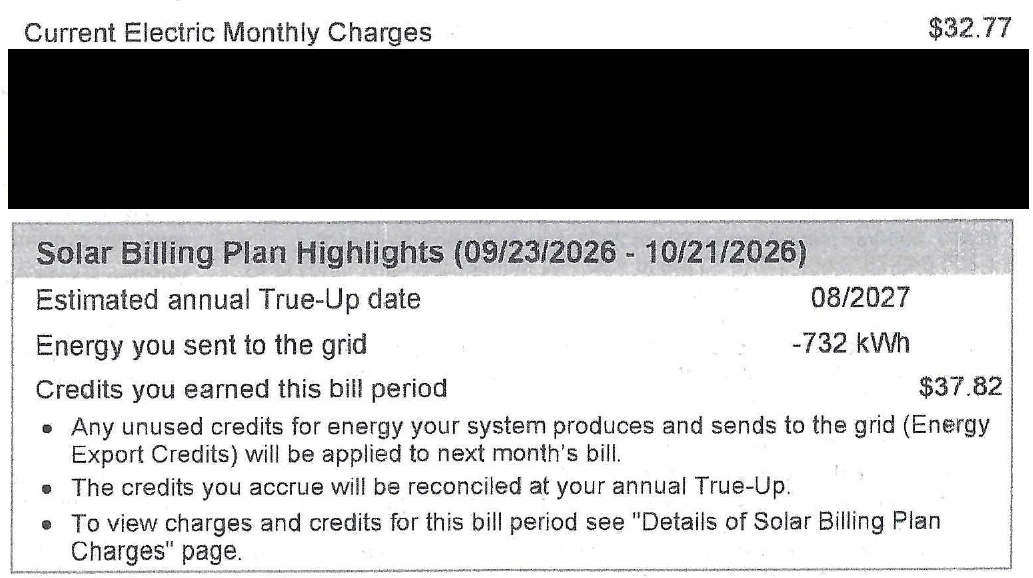
On his statement for September 23 to October 21, 2026, his electric charges were $32.77. His panels and batteries sent 732 kWh to the grid and earned $37.82 in credits.
On video
Watch: Brett answers the 12 questions homeowners ask most
Brett Joerger, Westhaven's founder, answers the 12 questions homeowners ask most about adding a battery to solar they already have. The answers on this page have the full detail and PG&E's rules.
Chapters
- 0:00 Intro
- 1:03 Can I add a battery to the solar I already have?
- 1:38 What happens to my solar and battery when the power goes out?
- 3:55 Whole home backup, or just the critical loads?
- 5:00 Will adding a battery move me from NEM 1 or NEM 2 to NEM 3?
- 5:52 What is zero export, and how does it keep me on NEM 1 or NEM 2?
- 7:20 I'm on NEM 1. Should I add a battery now, or wait until my 20 years end?
- 8:40 Is a battery worth it if I'm still on NEM 2?
- 9:23 Which batteries work with my system?
- 10:04 Will I need a new inverter or a new main panel?
- 10:41 What about rebates and the tax credit?
- 11:21 My system is leased, or my installer is gone. Now what?
- 11:46 What are the steps, and how long does it take?
- 12:21 Close
Read the transcript
Brett Joerger speaks unless another speaker is named.
0:00 Intro
I'm Brett Joerger. I started Westhaven Power. We're based in Yuba City, and our crews have done more than 10,000 installs across Northern California.
First it was the bill. Now it's the lights. Most of you got solar to fight PG&E's bills. Today more homeowners tell me they want a battery for a different reason. They want the power to stay on when the grid goes down.
If you have solar on NEM 1 or NEM 2, your first worry is whether adding a battery will kick you into NEM 3. It won't. I'll show you what PG&E's own rules say. I'll also explain zero export. That's how we add a battery and more panels without changing your NEM.
These are the 12 questions homeowners ask me most. The full answers, with PG&E's own rules linked, are on our website at westhavenpower.com/add-battery-to-existing-solar.
1:03 Can I add a battery to the solar I already have?
Yes. Most home solar systems can take a battery. It doesn't matter if another company installed it, or if it's 10 or 20 years old.
Three things decide how we do it: the kind of inverter you have, the condition of your main electrical panel, and who owns the system.
More than 160,000 homes within 75 miles of Yuba City have solar and no battery. So if that's you, you're in the majority.
1:38 What happens to my solar and battery when the power goes out?
Solar by itself shuts off when the grid goes down. That's a safety rule. It protects the crews working on the lines. Your solar was built to lower your bill. It was not built to keep your lights on. That's the battery's job.
When the grid drops, the battery disconnects your home from it in a fraction of a second. Your home runs on its own power. With the right setup, your solar keeps running and recharges the battery every day, so you can ride through an outage that lasts days.
PG&E shuts power off on purpose when fire risk is high. Since 2024, those planned shutoffs have reached counties within 75 miles of us in 11 of the 16 events PG&E has reported. If you live in the foothills or along the edge of the valley, you know them well.
PG&E also sets lines to trip off the instant something touches them. Those outages come with no warning. And storms take the power out everywhere, including here in Yuba City.
Here's what that looks like in real life. These are two of our customers.
Matthew H., Westhaven solar and battery customer: Last year we had an outage that took us out for probably three days. We had just went grocery shopping, so all the food was spoiled at that point. I can't afford, anytime the power goes out, for us to have $500 worth of food spoiled.
And I didn't realize the power was out until I came downstairs and I looked outside and nobody else had anything going. My wife was still cooking, the TV was still on. I was like, hey, the power's out, right? And she was like, really? I was like, yeah. But we didn't notice anything.
Brandon T., Westhaven customer, Yuba City: I did notice a big change when there was a storm. I don't remember when. I think it was last year. My parents lost their power, because they don't have solar. And then other members of my family didn't have power, all the neighbors. And the backup battery held for, I believe, 48 hours. Everything was running. So everybody came over here.
Interviewer: So you're the hero.
Brandon T.: Yeah, I was the hero for the night.
3:55 Whole home backup, or just the critical loads?
There are two ways to back up a home, and you choose one.
The first is critical loads. That's the refrigerator, the lights, the outlets and the Wi-Fi. It takes a smaller battery, and it keeps the basics running through a long outage.
The second is the whole home. Everything stays on, including the air conditioning. When the grid goes down, you may not even notice.
The difference is how much battery you need and how your electrical panel is wired. Two Tesla Powerwalls, or four Enphase batteries, handle just about everything in a typical home.
If you have a well pump, a pool pump or central air, tell us. Big motors need a battery with enough power to start them.
We size it from your real usage, your last 12 months from PG&E. And if you want the battery to refill faster in a long outage, that's where extra panels come in. I'll get to that.
5:00 Will adding a battery move me from NEM 1 or NEM 2 to NEM 3?
No. This is the one people worry about most, so I'll be exact.
NEM 3 is what most people call PG&E's Solar Billing Plan. It's the plan where the power you send back to the grid earns a few cents.
PG&E's own tariff says adding a battery does not take away the rest of your 20 years. That's true on NEM 1 and on NEM 2. You stay on your plan, and your 20-year date doesn't move.
There's one exception. If the battery is paid for with a state rebate called SGIP, reserved on or after June 4, 2024, PG&E does move you to NEM 3. That rebate is closed to new home applications now.
And yes, PG&E has to approve the battery before it's turned on. We'll file that for you.
5:52 What is zero export, and how does it keep me on NEM 1 or NEM 2?
A battery by itself keeps your plan. Zero export is for when you want more panels with it. Most homeowners have never been told about it.
Zero export is a second system. We put in a battery and some new panels, separate from the solar you already have. We set it so it never sends power back to PG&E. Everything it makes is used in your home.
Your original system isn't touched. So your NEM 1 or NEM 2 stays exactly as it is, and your 20-year date doesn't move. PG&E's own tariff says so. PG&E calls it non-export.
Here's why it matters. On NEM 1 or NEM 2, you can only add a small amount of panels to your existing system: 10 percent of its original size, or 1 kilowatt, whichever is greater. Go over that with panels that export, and the whole system moves to NEM 3, old panels included. With zero export, you get the battery and the extra panels, and you keep your plan.
The trade-off is that the new panels earn no credits from PG&E. The battery stores what they make, and your home uses it at night. In an outage, those extra panels also refill the battery faster.
One more thing. Zero export does not add time to your 20 years. When they're up, PG&E moves you to NEM 3.
7:20 I'm on NEM 1. Should I add a battery now, or wait until my 20 years end?
Adding a battery now does not end your NEM 1 early. You keep it until your 20 years are up.
So the question is what the battery does for you in the meantime. The answer is protection. If the power goes out tonight, a home with a battery stays on. That's why many of our customers added one years before their date.
On the bill, I'll be straight with you. While you're on NEM 1, the power you send back earns about what you pay for power. So a battery won't change your bill much yet.
That changes when your 20 years end. PG&E moves you to NEM 3 at your next true-up, and the power you send back drops to a few cents. From then on, the battery keeps your solar in your home for the evening, when power costs the most.
That happened to me. PG&E moved my house to NEM 3 in August. My batteries were already in. On my October bill, my credits were more than my electric charges.
If you don't know when your 20 years end, we have a page on that: westhavenpower.com/nem-1-expiration.
8:40 Is a battery worth it if I'm still on NEM 2?
On NEM 2, think of a battery as protection first. It keeps your home running when the grid goes down. For a lot of NEM 2 homeowners, that's reason enough.
On the bill, I'll give it to you straight. The power you send back still earns close to what you pay. So a battery lowers your bill less than it does on NEM 3.
It also gets you ready for when your 20 years end. Then you move to NEM 3, and the power you send back drops to a few cents.
If you're moving in a few years, and outages don't touch you, it can wait. I'd rather tell you that than sell you anything.
9:23 Which batteries work with my system?
It depends on what's on your house now.
If you have Enphase microinverters, an Enphase battery goes on the same system, or a Tesla Powerwall goes beside it. If you have a SolarEdge inverter, a SunPower system, or an SMA or a Fronius, the battery goes beside it, and your existing solar stays as it is.
You don't have to match brands. Near Yuba City, about two out of three solar homes have Enphase or SolarEdge equipment. We install Tesla and Enphase. There's a table on the page that shows what fits each system.
10:04 Will I need a new inverter or a new main panel?
Usually not a new inverter. A battery that sits beside your solar has its own.
The exception is an old inverter that's failing or out of warranty. Then we take it out and wire your panels into the battery's own inverter. That fixes two things in one job.
The main panel is the part people miss. That's where the hidden problems are, and an upgrade costs a few thousand dollars. So we inspect your panel before we give you a price.
10:41 What about rebates and the tax credit?
The federal tax credit for a battery you buy ended December 31, 2025. A leased battery is different. The leasing company can still use a credit, and that's why lease payments can be lower.
The state's battery rebate, called SGIP, is closed to new home applications. Other rebates open and close, so ask us what's open when you call.
And PG&E pays battery owners $2 for every extra kilowatt hour they deliver during a grid emergency. That program runs through at least 2027.
11:21 My system is leased, or my installer is gone. Now what?
If your solar is on a lease or a PPA, a company owns that equipment. You need their consent in writing before anything is added. Ask them first.
If the company that installed your solar is out of business, you can still add a battery. You don't need the original installer. We service systems we did not install.
11:46 What are the steps, and how long does it take?
Here's how it goes. You approve a PG&E data share, which sends us your last 12 months of usage. We inspect your main panel and your existing solar. You get a design and a price. We pull the permit and file with PG&E. We install the battery. The city or county inspects it. Then PG&E gives permission to operate.
PG&E's part usually takes a few weeks. Across more than 16,000 battery applications, half were approved within 37 days.
12:21 Close
Those are the 12 questions. A battery does two jobs. It keeps your home running when the grid goes down, and it keeps your solar power in your home. Done right, it does both without touching your NEM.
Every answer, with PG&E's rules and the table for your equipment, is at westhavenpower.com/add-battery-to-existing-solar.
If you want to go deeper, join me on the Northern California Power Briefing. It's free, it's live every Wednesday and Saturday, and I answer your questions.
I'm Brett Joerger. Thanks so much for watching.
The numbers
Is a battery worth it on my plan?
I am on NEM 1. Should I add a battery now, or wait until my 20 years end?
Adding a battery now does not end NEM 1 early, so the plan itself is not a reason to wait. What changes is what the battery does for you. While you are on NEM 1, the power you send back earns about what you pay, so a battery lowers the bill only a little. In those years its job is backup power in outages. When your 20 years end, PG&E moves the home to NEM 3 (the Solar Billing Plan) at the next true-up, where the power you send back earns a few cents per kWh. Brett's averaged about 5 cents in October 2026. From then on the battery keeps your daytime solar in your home for the evening, when power costs the most. A battery that is already in place is working on the first day of NEM 3. To find the date your 20 years end, see our NEM 1 expiration page.
Is a battery worth it if I am still on NEM 2?
It depends on what you want it for. On NEM 2, the power you send back still earns close to what you pay, so a battery lowers the bill less than it does on NEM 3 (the Solar Billing Plan). The reasons NEM 2 homeowners add one are backup power in outages and being ready for the day their 20 years end and the home moves to NEM 3.
I am already on NEM 3 (the Solar Billing Plan). What changes if I add a battery?
Your plan stays the same. If your home went solar on NEM 3, its nine-year period stays too. A home that was moved to NEM 3 at the end of NEM 1 or NEM 2 has no nine-year period. What changes is where your solar goes. The battery stores daytime solar, and your home uses it from 4 to 9 p.m., when PG&E charges the most. On Brett's October 2026 bill, his electric charges were $32.77 and his credits were $37.82.
Will my true-up bill go down?
Usually, by an amount that depends on your plan. The battery covers your evening use with stored solar, so you buy less power from 4 to 9 p.m. The effect is largest on NEM 3 (the Solar Billing Plan) and smaller on NEM 1 and NEM 2.
Does PG&E pay me for power from my battery?
Yes, through one program today. PG&E's Emergency Load Reduction Program pays $2.00 for each extra kWh a battery delivers during a grid emergency. Events fall between May and October, from 4 to 9 p.m. Tesla says owners typically earn up to $16 per Powerwall per event. The program runs through at least 2027, and you enroll through your battery provider. A second program, run by the state, stopped taking new Tesla sign-ups in March 2026.
When is a battery not worth it?
A battery is hard to justify in three cases: you are moving in the next few years, you use very little power in the evening and outages do not affect you, or your leasing company will not allow it.
Should I replace the whole system instead?
Sometimes. If the inverter has failed and the roof needs work, replacing the system and adding a battery in one job can make sense. On NEM 1 or NEM 2, keep the new system within the size limit, or the whole system moves to NEM 3 (the Solar Billing Plan).
What does it cost, and what help is there?
How much does it cost to add a battery to existing solar?
The cost depends on six things: how many batteries, whether your inverter stays or is replaced, the condition of your main electrical panel, whole-home or critical loads backup, how far the battery sits from the panel, and local permit fees. Westhaven gives a price after it has inspected your main panel and your existing solar.
How can I pay for a battery?
There are four ways: cash, a loan, a lease, or a prepaid lease. With a lease, a finance company owns the battery and you make a monthly payment. California also backs loans for home energy projects through its GoGreen Home program, and a battery added to existing solar qualifies.
Can I lease just a battery?
Yes. A battery can be leased without new solar. The lease is its own agreement and does not change the loan or lease on your panels.
I am still paying off my solar. Can I add a battery?
Yes. The battery is paid for separately. Your existing solar loan or lease stays as it is.
Is there still a tax credit for batteries?
Not for a battery you buy. The federal credit for homeowners who buy ended December 31, 2025. A leased battery is different: the leasing company can still use a federal credit, which is why lease payments can be lower. The 2027 deadline people quote applies to solar. The tax code says it does not apply to energy storage, so a battery leased by itself is not on that deadline.
Is SGIP still open?
No. PG&E's page shows every home battery rebate under SGIP closed to new applications. Other rebates open and close during the year, so ask what is open when you get your price. One more thing to know: a NEM 1 or NEM 2 home that uses an SGIP rebate for a battery can be moved to NEM 3 (the Solar Billing Plan).
What happens to the battery when I sell my house?
A battery you own sells with the house, and the NEM term stays with the house too. A leased battery is either transferred to the buyer or paid off at sale.
Will my homeowners insurance change?
Tell your insurer when the battery is installed. A permanently installed battery is normally covered as part of the home, but each insurer sets its own terms.
What if my system is leased or on a PPA?
Can I add a battery to a leased or PPA system?
Only with the owner's consent, in writing. On a lease or a PPA (power purchase agreement), a company owns the panels and the inverter. The published contracts from Sunrun, Tesla (SolarCity), Vivint, Sunnova and SunPower all require the owner's consent before anything is changed, and none makes an exception for a battery that sits beside the system. Sunrun's 2025 agreement also bars connecting added storage to the system or its electrical panel without a separate transfer switch. Sunrun and Spruce Power sell battery add-ons to their own customers. Sunnova and SunPower leases are now serviced by SunStrong. For a system leased through Westhaven, the lease stays as it is and the battery goes on its own agreement.
The steps
What are the steps, and how long does it take?
What are the steps?
- You approve a PG&E data share, which sends your last 12 months of usage.
- A technician inspects your main electrical panel and your existing solar.
- You get a design and a price.
- The installer pulls the permit and files the PG&E application.
- The battery is installed.
- The city or county inspects it.
- PG&E gives permission to operate.
How long does it take?
Plan on one to three months from signing to turning it on. PG&E says installing and connecting a battery can take three months or longer. PG&E's own approval is a smaller part of that. Across 16,214 battery add-on applications since 2018, half were approved within 37 days of filing, and one in four took more than 109 days.
Do I need a permit?
Yes. A home battery needs a building permit from your city or county, and PG&E's approval. Your installer handles both. Placer County issues battery permits instantly through an online system called SolarAPP+. Sacramento County uses the same system for solar but does not accept batteries in it yet. No building department near Yuba City publishes how long a battery permit takes.
Where does the battery go?
Most go in the garage or on an outside wall. California's residential code does not allow a battery in a bedroom or in a closet that opens into one. Units sit at least 3 feet apart and 3 feet from doors and windows, unless the product's safety listing allows less. A battery in the path of a car needs impact protection, such as a steel post in front of it.
Will I need a main panel upgrade?
Sometimes. The electrical code limits how much solar and battery can feed into a panel. A 200-amp panel with a 200-amp main breaker has room for 40 amps, and one Powerwall 3 needs more than that. The installer then changes how the battery connects, or upgrades the panel, which costs a few thousand dollars. Westhaven inspects the panel before it gives a price.
Will my power be off during the install?
Yes, for part of the install day, while the battery is connected to your electrical panel.
Will adding a battery void my solar warranty?
An AC-coupled battery connects beside your solar and leaves the panels and inverter untouched, so their manufacturer warranties stay in place. If the old inverter is replaced, its warranty ends with it and the new equipment carries its own.
Who do I call if something breaks afterward?
Call the company that installed the battery. Westhaven services the batteries it installs and also services solar it did not install.
Will I have two apps?
Possibly. Your solar keeps its own app. The battery's app shows the battery, your home's use and the grid.
What should I have ready before I call?
Five things: a recent PG&E bill, the date your solar was turned on, a photo of your inverter's label, a photo of your main electrical panel with the door open, and your lease contract if the system is leased.
What should I ask an installer before I sign?
Ask eight questions. Who files the PG&E application? Will you put in writing that my NEM plan stays? Is the battery AC-coupled or DC-coupled, and why? Whole-home or critical loads backup? Did you inspect my main panel before pricing? Will all of my solar run in an outage? Who does the work, your crew or a subcontractor? Who services it afterward?
Can I install a battery myself?
No. A home battery wired into your electrical panel needs a permit, a licensed contractor and PG&E's approval. Small portable batteries that plug into the wall are a different product and do not back up a home.
Does this work the same with MCE, Sonoma Clean Power, Pioneer or SMUD?
I get my power from MCE, Sonoma Clean Power or Pioneer. What is different?
The PG&E rules above still apply, because PG&E approves the battery. Some local providers add their own offers. MCE pays enrolled battery owners $10 a month for a battery of 7 to 20 kWh and $20 a month above that, and says enrolling does not change your NEM status. Ava opened a battery rebate on November 2, 2026. Sonoma Clean Power has no battery program today and plans one for 2027. Pioneer and Valley Clean Energy have no program that pays battery owners.
I am a SMUD customer. Does adding a battery change my net metering?
It depends on whether you take SMUD's battery incentive. A SMUD home on legacy net metering keeps it through December 31, 2030 if it adds a battery with no SMUD incentive. Taking the incentive moves the home to SMUD's Solar and Storage Rate. None of the PG&E rules on this page apply to SMUD homes.
Free live webinar
Join the NorCal Power Briefing
The NorCal Power Briefing is a free live webinar Brett Joerger hosts every Wednesday and Saturday. Brett walks through how batteries, NEM 1, NEM 2 and NEM 3 work for Northern California homes, using real bills, and answers your questions live.
Join the webinarThe data
How many solar homes near Yuba City have no battery?
More than 160,000 homes within 75 miles of Yuba City have solar and no battery. That is about five of every six solar homes.
- On NEM 1, about 97 of every 100 solar homes have no battery. On NEM 2, about 9 of every 10 have none. On NEM 3 (the Solar Billing Plan), more than 8 of every 10 have one.
- At least 16,000 PG&E homes have added a battery to solar they already had since 2018.
- PG&E approved 8,391 battery-only applications in 2025, up from 3,847 in 2023.
| City | Solar homes | Without a battery | Share with a battery |
|---|---|---|---|
| Lincoln | 13,867 | 12,261 | 11.6% |
| Vacaville | 13,138 | 11,157 | 15.1% |
| Chico | 12,795 | 11,719 | 8.4% |
| Rocklin | 11,359 | 10,223 | 10.0% |
| El Dorado Hills | 10,913 | 9,352 | 14.3% |
| Fairfield | 10,523 | 8,560 | 18.6% |
| Yuba City | 8,290 | 7,226 | 12.8% |
| Woodland | 7,387 | 6,394 | 13.4% |
| Davis | 6,122 | 5,475 | 10.6% |
| Napa | 6,060 | 4,572 | 24.6% |
| Santa Rosa (part of the city) | 5,447 | 3,727 | 31.6% |
| Auburn | 5,351 | 4,334 | 19.0% |
| West Sacramento | 4,848 | 4,126 | 14.9% |
| Oroville | 4,444 | 3,768 | 15.2% |
| Plumas Lake | 3,650 | 2,887 | 20.9% |
| Placerville | 3,639 | 2,817 | 22.6% |
| Dixon | 3,611 | 3,180 | 11.9% |
| Grass Valley | 3,414 | 2,670 | 21.8% |
| Granite Bay | 3,361 | 2,821 | 16.1% |
| Marysville | 2,987 | 2,570 | 14.0% |
| Rio Vista | 2,637 | 2,257 | 14.4% |
| Paradise | 2,627 | 2,213 | 15.8% |
| Suisun City | 2,463 | 1,993 | 19.1% |
| Cameron Park | 2,450 | 1,964 | 19.8% |
| Loomis | 2,161 | 1,837 | 15.0% |
| All homes within 75 miles of Yuba City | 201,000 | 168,639 | 16.1% |
| All PG&E territory | 950,195 | 771,920 | 18.8% |
Source: Westhaven analysis of California DG Stats PG&E interconnection data, current through August 31, 2026. A home is counted once, at its original permission to operate date. Battery counts are a minimum, because PG&E's file does not link every battery application to its home. Roseville and most of Sacramento are served by their own utilities and are not in this data. Download the data (CSV).
Common wrong answers about adding a battery
- "Adding a battery never affects NEM 2." True for almost everyone. The exception is a battery paid for with an SGIP rebate reserved on or after June 4, 2024.
- "Adding a battery moves you to NEM 3." No. PG&E's tariff says adding storage does not end your 20 years.
- "Adding a battery restarts your 20 years." No. Nothing restarts or extends them.
- "Going over the 10% limit always costs you NEM." No. The added panels can connect as zero export, and your plan stays.
- "Zero export lets you keep NEM 1 or NEM 2 past 20 years." No. It protects your plan when you add panels. It does not add time.
- "You don't have to tell PG&E." You do. A battery needs a new PG&E application.
- "PG&E approves a battery in 5 to 10 days." Half of approvals took longer than 37 days.
- "You have to use the same brand as your solar." Usually not.
- "A SolarEdge battery works with any SolarEdge inverter." No. The Home Battery needs a Home Hub inverter, and the Nexis Battery needs a Nexis inverter.
- "The 30% tax credit still covers a battery you buy." It ended December 31, 2025.
- "SGIP will pay for most of it." It is closed to new home applications in PG&E territory.
- "Solar works in an outage." Not without a battery.
Grid liberation
See what fits your home
We share your options. We design around your home. You take charge of your power.
About this page
Reviewed by Brett Joerger, Founder. CA License 965111. Last reviewed .
Westhaven Power is not affiliated with PG&E, Tesla, Enphase, SolarEdge or FranklinWH.
Sources
- PG&E Electric Schedule NEM2 PDF
- PG&E Electric Schedule NEM PDF
- PG&E Electric Schedule NBT PDF
- PG&E Electric Rule 21 PDF
- PG&E Solar Billing Plan
- PG&E Electric Home rate
- PG&E Self-Generation Incentive Program
- Tesla, Powerwall system design
- Tesla, combining systems
- Tesla, PG&E virtual power plant
- Enphase storage compatibility
- Enphase, IQ Battery 10C for third-party solar
- SolarEdge, Nexis orders open across the U.S. (July 13, 2026)
- SolarEdge, PG&E and SDG&E approve the Nexis meter collar (Oct 20, 2026)
- FranklinWH aPower 2
- MCE Solar Billing Plan
- SMUD solar customers
- GoGreen Home PDF
- California DG Stats
Change log
- : page published.
Glossary
- AC-coupled
- An AC-coupled battery has its own inverter and connects to your home's wiring beside the solar you have.
- DC-coupled
- A DC-coupled battery shares one inverter with the panels, so the power is converted once and a little less is lost.
- Inverter
- Solar panels make DC power, and your home runs on AC. A box on the wall near your electrical panel or in the garage is a string inverter, and the brand is on the label.
- Microinverter
- No box on the wall usually means microinverters under each panel.
- NEM 1
- While you are on NEM 1, the power you send back earns about what you pay. The 20 years run from the date your solar was first turned on.
- NEM 2
- On NEM 2, the power you send back still earns close to what you pay. NEM 2 homes are already on a time-of-use plan. The 20 years run from the date your solar was first turned on.
- NEM 3
- PG&E calls it the Solar Billing Plan, and PG&E's tariff calls it the Net Billing Tariff. The power you send back earns a few cents per kWh.
- Zero export
- Zero export is a second system, set up separate from the solar you already have and set so it never sends power to PG&E's grid. It is usually a battery with some new panels. PG&E calls it non-export.
- Interconnection
- Adding a battery to solar that has none needs a new interconnection request, and the battery cannot run until PG&E gives permission to operate. That is in PG&E's Rule 21. Your installer files it.
- Permission to operate (PTO)
- PG&E has to approve the battery before it is turned on. The battery cannot run until PG&E gives permission to operate.
- True-up
- When your 20 years end, PG&E moves the home to NEM 3 (the Solar Billing Plan) at the next true-up. On a NEM 2 account, PG&E may true up your bill when the battery is approved.
- PPA
- On a lease or a PPA (power purchase agreement), a company owns the panels and the inverter.
- SGIP
- A state rebate called SGIP. PG&E's page shows every home battery rebate under SGIP closed to new applications.
- Emergency Load Reduction Program
- PG&E's Emergency Load Reduction Program pays $2.00 for each extra kWh a battery delivers during a grid emergency. Events fall between May and October, from 4 to 9 p.m.